


How Much Does a Ford F150 Weigh
How Much Does a Ford F150 Weigh
Complete weight specifications and performance insights for America’s best-selling truck
We understand that knowing your Ford F150’s weight is crucial for making smart decisions about towing, payload, and overall performance. The weight of a Ford F150 varies significantly depending on the model year, cab configuration, and engine choice.
At Autoplex 2000 in Sulphur, Louisiana, we help customers understand these important specifications every day. Whether you’re hauling equipment for work or planning a family camping trip, knowing your truck’s weight helps you stay safe and legal on the road.
Quick Answer
The Ford F150 weight ranges from approximately 4,021 pounds for a base Regular Cab model to over 5,757 pounds for a fully loaded SuperCrew configuration. The curb weight depends on engine choice, drivetrain, and cab style.
This comprehensive guide will walk you through everything you need to know about Ford F150 weight specifications. We’ll explain how different factors affect your truck’s weight and why this information matters for your daily driving needs.
Understanding Ford F150 Weight Specifications
When we talk about Ford F150 weight, we need to understand several different measurements. Each type of weight tells us something important about what your truck can do.
The most common weight measurement is curb weight. This is how much your F150 weighs when it’s ready to drive but empty of passengers and cargo. It includes all fluids like gas, oil, and coolant, plus a full tank of fuel.
What is Curb Weight?
Curb weight is the baseline measurement we use for all other calculations. For the 2024 Ford F150, curb weights start around 4,021 pounds for the lightest Regular Cab model. The heaviest SuperCrew models can weigh over 5,700 pounds.
This weight difference of nearly 1,700 pounds between models shows why it’s important to know your specific truck’s weight. The heavier your truck, the less payload capacity you’ll have available.
Gross Vehicle Weight Rating (GVWR)
The GVWR is the maximum safe weight your F150 can weigh when fully loaded. This includes the truck itself, passengers, cargo, and anything you’re towing on the tongue. Ford engineers set this limit to keep you safe.
Most F150 models have a GVWR between 6,010 and 7,050 pounds. This means if your truck weighs 5,000 pounds empty, you can safely add about 1,000 to 2,000 pounds of people and cargo.
Regular Cab Weight Range
4,021 – 4,800 pounds depending on engine and drivetrain
SuperCab Weight Range
4,300 – 5,200 pounds with extended passenger space
SuperCrew Weight Range
4,500 – 5,757 pounds for full four-door comfort

The 2024 Ford F150 showcasing different configurations that affect overall weight
How Much Does a Ford F150 Weigh by Model Year and Configuration
We’ve seen how Ford F150 weights have changed over the years. The switch to aluminum body panels in 2015 made a big difference. This change reduced weight by several hundred pounds compared to older steel-bodied trucks.
The weight of your Ford F150 depends on several key factors. Each choice you make when buying affects the final weight. Let’s break down how different options change your truck’s weight.
Weight Differences by Cab Style
The cab style you choose has the biggest impact on your F150’s weight. Regular Cab models are the lightest because they have the smallest passenger area. SuperCab models add about 200-400 pounds for the extra space and doors.
SuperCrew models are the heaviest because they offer full four-door convenience and maximum passenger room. The extra steel, glass, and interior components add significant weight but provide the most comfort.
| Cab Configuration | Base Weight Range | Typical GVWR | Payload Capacity |
|---|---|---|---|
| Regular Cab | 4,021 – 4,800 lbs | 6,010 – 6,500 lbs | 1,700 – 2,480 lbs |
| SuperCab | 4,300 – 5,200 lbs | 6,300 – 6,800 lbs | 1,600 – 2,300 lbs |
| SuperCrew | 4,500 – 5,757 lbs | 6,500 – 7,050 lbs | 1,500 – 2,100 lbs |
Engine Choice Impact on Weight
Different engines also affect your F150’s weight. The base 3.3L V6 engine is the lightest option. The 2.7L EcoBoost V6 adds turbochargers and intercoolers, increasing weight slightly.
The 5.0L V8 engine is heavier than the V6 options due to its larger size and cast-iron block. The 3.5L EcoBoost V6 falls somewhere in the middle. The PowerBoost hybrid system adds the most weight because of its electric motor and battery pack.
Four-wheel drive adds approximately 200-300 pounds compared to rear-wheel drive models. This extra weight comes from the front differential, transfer case, and additional driveline components.
What Factors Influence the Weight of a Ford F150
We help customers understand that many factors affect their F150’s final weight. Some of these factors are obvious, while others might surprise you. Knowing these details helps you make better choices when configuring your truck.
The materials Ford uses make a big difference. The aluminum body panels save hundreds of pounds compared to steel. However, Ford still uses high-strength steel for the frame to maintain strength and durability.
Trim Level and Equipment Packages
Higher trim levels typically weigh more than base models. Features like leather seats, premium sound systems, and advanced technology add weight. The difference between a base XL and a loaded Platinum can be several hundred pounds.
Popular options that add weight include:
- Moonroof or panoramic sunroof systems
- Premium audio systems with multiple speakers
- Power-adjustable seats with heating and cooling
- Advanced driver assistance features
- Bed liners and tonneau covers
Bed Length and Drivetrain Options
The bed length you choose affects weight too. A longer 8-foot bed weighs more than a 5.5-foot or 6.5-foot bed. The extra steel and larger tailgate add to the overall weight.
Four-wheel drive systems add significant weight but provide better traction and capability. The front axle, transfer case, and additional driveshafts all contribute to the weight increase.
2WD vs 4WD Weight Difference
4WD adds approximately 200-300 pounds to any configuration
Bed Length Impact
8-foot beds add about 50-75 pounds over shorter beds
Trim Level Variations
Luxury trims can add 100-200 pounds in features
How Ford F150 Weight Affects Performance and Fuel Efficiency
At Autoplex 2000, we explain to customers how their truck’s weight impacts daily driving. A heavier F150 requires more energy to accelerate and stop. This affects both performance and fuel economy in measurable ways.
Weight also affects how your F150 handles different driving situations. Heavier trucks feel more stable on the highway but may not feel as nimble in city driving. Understanding these trade-offs helps you choose the right configuration.
Impact on Towing and Payload
Your F150’s weight directly affects its payload capacity. Payload is calculated by subtracting the curb weight from the GVWR. A heavier truck has less payload capacity available for passengers and cargo.
For example, if your F150 has a GVWR of 6,500 pounds and weighs 5,000 pounds empty, you have 1,500 pounds of payload capacity. If the same truck weighed 5,300 pounds, you’d only have 1,200 pounds of payload.
Towing capacity can also be affected by weight. While the engine determines maximum towing capability, a heavier truck may reach its GVWR limit sooner when carrying passengers and cargo while towing.
Fuel Economy Considerations
Heavier F150 models typically get slightly lower fuel economy than lighter ones. The difference is usually small – maybe 1-2 mpg between the lightest and heaviest configurations with the same engine.
However, the engine choice has a much bigger impact on fuel economy than weight alone. A heavier truck with an efficient EcoBoost engine often gets better mileage than a lighter truck with a larger V8.
| Weight Category | Typical Weight Range | Performance Impact | Fuel Economy Effect |
|---|---|---|---|
| Lightweight (Regular Cab) | 4,000 – 4,500 lbs | Best acceleration | Highest MPG potential |
| Medium Weight (SuperCab) | 4,500 – 5,000 lbs | Balanced performance | Good efficiency |
| Heavy Weight (SuperCrew) | 5,000 – 5,757 lbs | More stable, less agile | Slightly lower MPG |
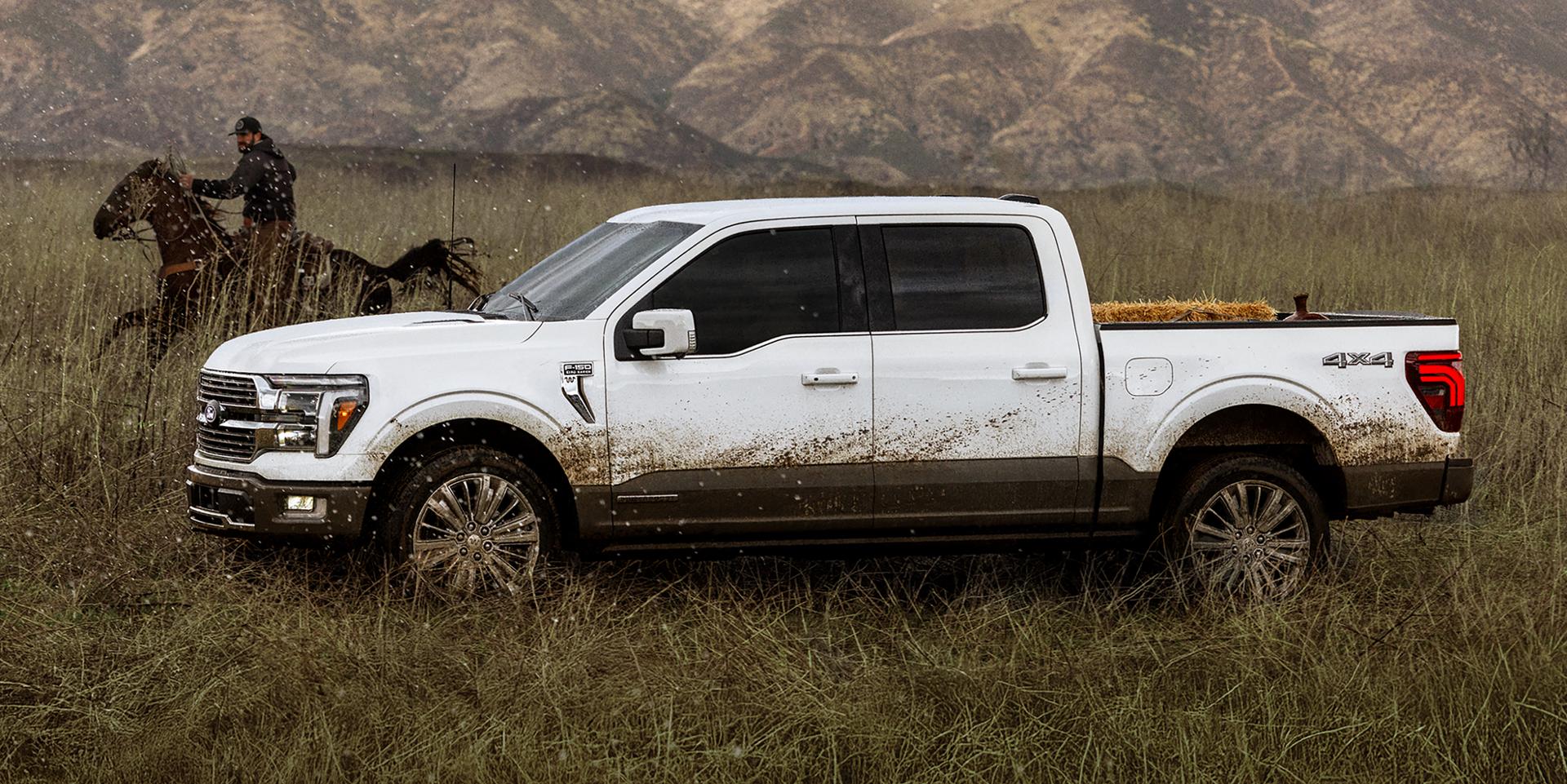
Understanding how weight affects your F150’s performance and capabilities
How to Find the Weight of Your Specific Ford F150
We often help customers find their specific truck’s weight information. There are several reliable ways to determine exactly how much your F150 weighs. This information is important for legal compliance and safe operation.
The easiest way is to check your truck’s door jamb sticker. This label shows the exact GVWR and other weight specifications for your specific vehicle. You’ll find this sticker on the driver’s side door frame.
Using Your VIN for Weight Information
Your Vehicle Identification Number (VIN) contains detailed information about your F150’s specifications. Ford’s website and other online tools can decode your VIN to show the exact weight specifications for your truck.
The owner’s manual also contains weight information specific to your F150’s configuration. This includes curb weight, GVWR, and payload capacity based on your exact options and equipment.
Professional Weighing Options
For the most accurate measurement, you can weigh your F150 at a truck stop or commercial scale. This gives you the actual weight with your current fuel level and any equipment you’ve added.
Many truck stops offer certified scales that provide legal weight documentation. This can be helpful if you need official weight verification for commercial use or legal compliance.
At Autoplex 2000, we can help you understand your F150’s weight specifications and what they mean for your specific needs. Our service team can also help you calculate payload and towing capacities based on your truck’s actual weight.
Get Expert F150 Weight and Specification Guidance at Autoplex 2000
Understanding your Ford F150’s weight is just the beginning. At Autoplex 2000 in Sulphur, Louisiana, we help customers make informed decisions about their truck needs. Our experienced team knows how weight affects every aspect of your F150’s performance.
Whether you’re shopping for a new F150 or need help understanding your current truck’s capabilities, we’re here to help. We can explain how different configurations affect weight, payload, and towing capacity to help you choose the perfect setup.
Visit us at Autoplex 2000 or call (337) 607-0888 to speak with our knowledgeable staff. We’ll help you find the right Ford F150 configuration for your specific needs and budget.
Frequently Asked Questions
What is the average weight of a Ford F150?
The average weight of a Ford F150 ranges from 4,021 pounds for a base Regular Cab model to 5,757 pounds for a fully loaded SuperCrew configuration. Most popular SuperCrew models weigh between 4,800 and 5,400 pounds depending on engine choice and options.
How does the weight of a Ford F150 vary by model year?
Ford F150 weights changed significantly in 2015 when Ford switched to aluminum body panels. This reduced weight by 600-700 pounds compared to previous steel-bodied models. Since 2015, weights have remained relatively consistent with minor variations based on new features and options.
What is the difference between curb weight and gross weight for a Ford F150?
Curb weight is how much your F150 weighs empty with fluids but no passengers or cargo. Gross Vehicle Weight Rating (GVWR) is the maximum safe weight when fully loaded with passengers, cargo, and trailer tongue weight. The difference between these numbers is your payload capacity.
Can the weight of a Ford F150 affect towing capacity?
Yes, a heavier F150 has less payload capacity available, which can limit how much additional weight you can carry while towing. However, the engine and drivetrain determine maximum towing capacity. Weight mainly affects how much cargo and passengers you can carry while towing.
What is the heaviest Ford F150 model?
The heaviest F150 models are typically SuperCrew configurations with the PowerBoost hybrid engine, 4WD, and luxury trim levels. These can weigh up to 5,757 pounds. The extra weight comes from the hybrid battery system, four-wheel drive components, and premium features.
0 comment(s) so far on How Much Does a Ford F150 Weigh